
Introduction to the Symbolism of Eagles in Art
Behold the majestic flight of symbolism as we delve into the awe-inspiring world of eagles in art! From ancient artifacts to modern masterpieces, the eagle has soared through civilizations and across canvases, embodying power, grace, and mystique. Join us on a journey through time and culture as we unravel the symbolic significance of this magnificent bird in artistry across the ages.
Wings of Power: Unveiling the Eagle’s Iconic Symbolism in Ancient Artifacts
In the realm of ancient artifacts, the eagle emerges as a symbol of power and majesty. Its wings spread wide, embodying strength and freedom that captivated civilizations across the world. From intricate carvings to elaborate sculptures, the eagle’s presence in art transcends time and culture.
Ancient artifacts adorned with eagles often depict them in flight or perched high above, symbolizing authority and dominance. The intricate details carved into these pieces reflect the reverence people held for this magnificent bird. In many cases, eagles were associated with deities or rulers, further solidifying their symbolic significance.
The iconic symbolism of the eagle in ancient artifacts speaks to humanity’s desire to elevate qualities like courage, vision, and leadership. As guardians of the skies, eagles became emblematic of protection and foresight in various cultures. Their presence in ancient art serves as a testament to our enduring fascination with these majestic creatures.
From Myth to Canvas: Tracing the Eagle’s Symbolic Journey in Artistic Expression
Embarking on a journey through the annals of artistic expression, we find the eagle majestically soaring from myth to canvas. Its symbolic significance transcends time and culture, captivating artists across civilizations. From ancient artifacts to modern masterpieces, the eagle’s presence is undeniable in the realm of art.
In Greek mythology, the eagle was associated with Zeus, symbolizing strength and power. Artists depicted this formidable creature in sculptures and pottery, embodying divine protection and authority. As art evolved through the ages, so did the representation of eagles in various forms – from intricate mosaics to elaborate paintings.
The eagle’s symbolic journey continued into Roman art where it became an emblem of military prowess and imperial might. Its iconic profile adorned banners and coins, reflecting dominance and victory. Through skilled brushstrokes and innovative techniques, artists brought forth the essence of the eagle’s symbolism onto canvas with unparalleled depth and emotion.
Exploring this transformative odyssey reveals how artists have captured the timeless allure of the eagle in their creations, elevating its symbolic resonance to new heights within artistic expression.
Guardians of the Skies: How Eagles Soared into the Heart of Artistic Imagination
In the vast expanse of artistic expression, eagles have emerged as powerful symbols that captivate the human imagination. These majestic birds, with their soaring flight and piercing gaze, embody strength and freedom. Artists throughout history have been drawn to depict eagles in various mediums, from sculpture to painting, capturing their essence as guardians of the skies.
The eagle’s presence in art transcends mere representation; it symbolizes courage, vision, and nobility. Whether perched majestically on a cliff or depicted mid-flight with outstretched wings, eagles evoke a sense of awe and admiration. Their symbolic significance extends beyond physical attributes to represent qualities valued by societies across cultures.
From ancient civilizations to modern interpretations, the eagle’s iconic status remains unwavering. Its portrayal in art reflects not only artistic skill but also cultural values and beliefs. As guardians of the skies, eagles continue to inspire artists and viewers alike with their timeless appeal and enduring symbolism.
The Eagle’s Gaze: Examining Its Symbolic Resonance in Masterpieces Through the Ages
The eagle’s gaze, piercing and powerful, has captivated artists throughout history. In masterpieces across the ages, this majestic bird symbolizes strength, freedom, and vision. From ancient artifacts to Renaissance paintings, the eagle’s presence is unmistakable.
In artistry that spans civilizations and cultures, the eagle’s symbolic resonance transcends time. Its keen eyes convey a sense of watchfulness and wisdom in every brushstroke. Whether perched majestically or soaring high above, the eagle commands attention and respect.
Intricately woven into religious iconography and mythological tales, the eagle embodies divinity and protection. Artists have skillfully portrayed these themes through intricate details and symbolism in their works of art. Each stroke of the brush captures the essence of power and grace embodied by this noble creature.
As we delve into these masterpieces from different eras, we are reminded of the enduring allure of the eagle’s gaze in artistic expression. Its significance reverberates through centuries as a timeless symbol of courage and inspiration for both creators and admirers alike.
The Eagle in Ancient Civilizations
In ancient civilizations like Egypt, the eagle was revered for its connection to the sun god Ra. Depicted with outstretched wings and a fierce gaze, the eagle symbolized power and protection in Egyptian art.
Moving on to Greece, the majestic bird was associated with Zeus, the king of gods. Often seen as a messenger between mortals and deities, the eagle embodied strength and wisdom in Greek mythology.
In Rome, the eagle held significant symbolism as well. It became an emblem of Roman military might and authority. The “Aquila,” or Roman eagle standard, represented honor and supremacy on the battlefield.
Across these civilizations, whether soaring high in the sky or perched regally atop banners, the eagle’s presence left an indelible mark on art and culture. Its symbolic significance transcended geographical boundaries and resonated deeply within each society it graced.
A. Egypt
In ancient Egypt, the eagle held a significant place in art and symbolism. Depicted with outstretched wings, it symbolized protection and power. Egyptians believed that the eagle was a messenger between humans and the divine realms.
The majestic bird was associated with Horus, one of the most important deities in Egyptian mythology. Horus, often depicted as a falcon-headed god or with the body of a man and the head of an eagle, represented kingship and divine authority.
Eagles were also linked to Ra, the sun god, embodying strength and vision. They were seen as guardians of pharaohs and protectors against evil forces. The presence of eagles in hieroglyphics reflected their role as symbols of sovereignty and spiritual guidance.
From temples to tombs, eagles adorned various artifacts showcasing Egypt’s reverence for these magnificent creatures that soared high above earthly matters.
B. Greece
In ancient Greece, the eagle held a prominent place in art and symbolism. Known as the sacred bird of Zeus, the king of the gods, it was associated with power and majesty.
Greek artists often depicted eagles in their sculptures and pottery, showcasing them as symbols of strength and authority. The eagle’s presence in Greek mythology further solidified its significance, appearing in tales of heroes like Zeus himself.
The Greeks admired the eagle for its keen eyesight and ability to soar high above the earth. This characteristic translated into their artistic representations, where eagles were often portrayed alongside deities or victorious warriors.
From temple decorations to coins minted with eagle motifs, Greece celebrated this noble creature through various mediums. The intricate detail and reverence shown towards eagles in Greek art reflect a deep cultural appreciation for their symbolic importance.
C. Rome
In ancient Rome, the eagle held profound symbolism as a representation of power and strength. The Roman legions carried the aquila, or eagle standard, into battle as a sacred emblem of their military might and unity. This majestic bird was seen as a guardian spirit guiding the empire towards victory.
The Romans associated the eagle with Jupiter, the king of gods, linking it to divine authority and protection. It adorned coins, statues, and architectural elements throughout Rome as a symbol of imperial supremacy. As an embodiment of vigilance and dominance, the eagle became an integral part of Roman iconography.
Artworks depicting eagles in Roman culture often showcased them clutching thunderbolts or laurel wreaths in their talons – symbols of victory and triumph. These representations underscored the significance of the eagle in exuding power and majesty within the artistic realm during that era.
From military standards to architectural embellishments, Rome’s incorporation of eagles into art reflected not only their reverence for this noble creature but also their aspiration for enduring greatness through visual symbolism.
The Eagle in Religious and Mythological Contexts
In various cultures and belief systems, the eagle holds significant symbolic importance. In Christianity, the eagle is often associated with divine protection and strength. It is said to be a symbol of God’s power and might. The image of an eagle soaring high in the sky has been used to represent spiritual elevation and connection to the heavens.
In Native American cultures, eagles are revered as sacred animals embodying wisdom, courage, and freedom. They are seen as messengers between humans and the spirit world. The sight of an eagle flying overhead is believed to bring blessings and guidance from ancestors.
Legends and myths from around the world depict eagles as powerful beings capable of great feats. From carrying thunderbolts in Greek mythology to being companions of deities in Egyptian lore, eagles have always been portrayed as majestic creatures with supernatural abilities.
The symbolism attached to eagles in religious and mythological contexts showcases their universal appeal and timeless significance across civilizations throughout history.
A. Christianity
In Christianity, the eagle holds significant symbolic value, often representing spiritual elevation and divine protection. Throughout religious art and scripture, the eagle is portrayed as a symbol of God’s power and might, soaring above earthly concerns with unwavering strength.
The image of the eagle is commonly associated with Saint John the Evangelist due to its depiction in his gospel as a representation of higher truths and heavenly insights. Christians view the eagle as a messenger between heaven and earth, bridging the gap between mortal existence and eternal salvation.
In Christian iconography, eagles are depicted alongside figures of importance such as angels or Christ himself, emphasizing their role as bearers of profound spiritual messages. The majestic presence of these birds in religious artwork serves to inspire awe and reverence among believers.
Through its portrayal in Christian symbolism, the eagle continues to capture imaginations and convey powerful messages of faith, courage, and divine providence.
B. Native American cultures
Native American cultures have long held the eagle in high esteem as a symbol of strength, courage, and wisdom. Across various tribes and traditions, the eagle embodies spiritual significance and is often seen as a messenger between humans and the divine.
In many Native American creation stories, the eagle plays a pivotal role in shaping the world and connecting different realms of existence. Its ability to soar high above earthly matters signifies freedom and vision beyond physical limitations.
Among tribes like the Lakota Sioux and Navajo Nation, ceremonial dances featuring elaborate eagle feather headdresses are performed to honor this majestic bird. The intricate designs on these regal adornments reflect deep-rooted beliefs about unity with nature and reverence for all living beings.
To Native Americans, the eagle represents not just a creature of flight but a symbol of interconnectedness with all life forms. Through art forms such as pottery, textiles, and jewelry-making, indigenous artists continue to pay homage to this revered animal spirit that transcends time itself.
The Eagle as a National Symbol
Across various cultures and nations, the eagle has long been revered as a symbol of strength, freedom, and power. In the United States, the bald eagle holds significant importance as the national emblem. Its majestic presence is seen on currency, government seals, and military insignias.
The choice of the eagle as a national symbol reflects ideals such as courage and independence that are deeply ingrained in American identity. The soaring flight of eagles embodies the spirit of ambition and resilience that many associate with the nation itself.
In Native American cultures, eagles have also held sacred symbolism for centuries. They represent connection to the divine, wisdom, and protection. The reverence for these magnificent birds transcends borders and resonates with people around the world.
As a national symbol, the eagle serves as a reminder of unity amidst diversity—a powerful icon that represents pride in one’s heritage while embracing shared values of liberty and opportunity.
Modern Depictions of Eagles in Art
In the realm of modern art, eagles continue to captivate artists and viewers alike with their timeless symbolism. From contemporary paintings to digital illustrations, the majestic presence of these birds is interpreted in various creative ways.
Some artists choose to portray eagles as symbols of strength and freedom, using bold brushstrokes and vibrant colors to convey their power. Others opt for a more abstract approach, infusing surreal elements into their artwork to evoke a sense of mystery and wonder surrounding these magnificent creatures.
Photographers also capture stunning images of eagles in their natural habitats, showcasing the beauty of these birds in breathtaking detail. Through different artistic mediums, the modern depiction of eagles serves as a reminder of our deep-rooted connection to nature and the enduring spirit they represent.
As art continues to evolve, so too does our appreciation for the eagle’s symbolic significance in shaping our cultural landscape.
Interpretations of the Eagle’s Symbolism
The eagle, with its majestic presence and soaring capabilities, has long been a symbol of power, freedom, and courage in various cultures worldwide. In art, the eagle is often interpreted as a representation of strength and resilience. Its keen eyesight symbolizes clarity and vision, serving as a reminder to stay focused on goals despite challenges.
Many interpretations also associate the eagle with divinity or spiritual significance. In Native American cultures, it is seen as a messenger between humans and the divine realm. Similarly, in Christianity, the eagle represents resurrection and ascension due to its ability to soar high above earthly matters.
Artists throughout history have depicted eagles in diverse ways to convey different layers of symbolism. Whether portrayed in flight or perched majestically atop mountains, these artistic representations speak volumes about human aspirations for greatness and transcendence beyond physical limitations.
In contemporary art settings, the symbolism of eagles continues to evolve as artists infuse new meanings into their works. The eternal allure of the eagle’s symbolism lies in its ability to resonate with viewers on multiple levels simultaneously – from strength and freedom to spirituality and connection with higher realms.
Conclusion: The Enduring Power of the Eagle in
The enduring power of the eagle in art transcends time and borders, weaving a majestic presence across civilizations. From ancient artifacts to modern interpretations, the eagle’s symbolism resonates deeply with artists and viewers alike. Its wings of power symbolize strength, freedom, and courage, capturing the imagination for centuries.
In ancient civilizations like Egypt, Greece, and Rome, the eagle was revered as a symbol of divinity and authority. In religious contexts such as Christianity or Native American cultures, it embodies spiritual significance and protection. As a national emblem representing pride and patriotism in various countries worldwide.
Modern depictions continue to showcase the eagle’s regal aura through vibrant interpretations that blend tradition with contemporary artistry. The eagle’s gaze pierces through artistic masterpieces with symbolic resonance that speaks volumes without uttering a word.
As we explore the flight of symbolism embodied by the eagle in art across diverse cultures and eras, one thing remains clear—the enduring power of this magnificent creature continues to inspire awe and admiration among artists and audiences globally.
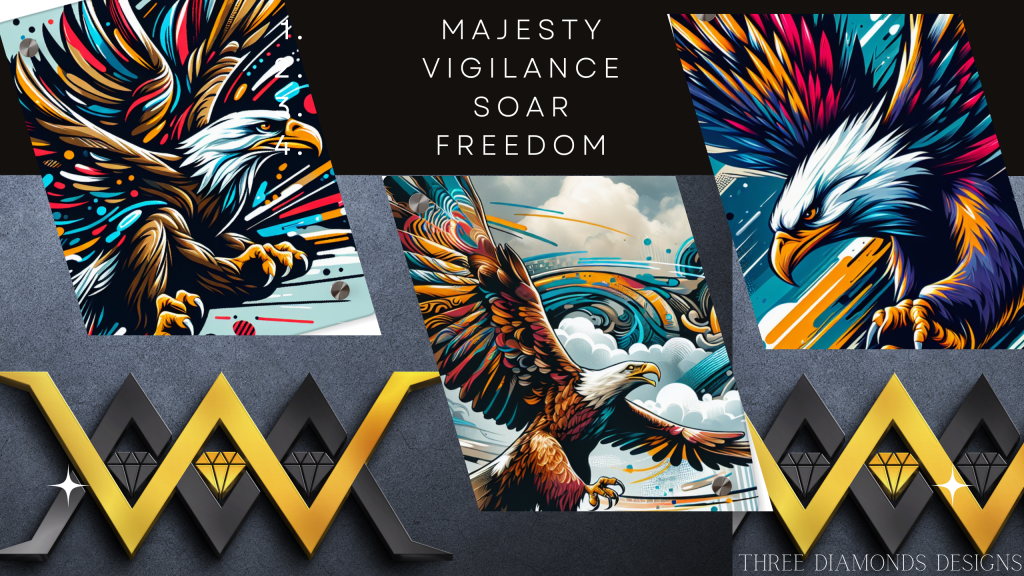
Check out the eagles in the Vibrant Wilderness Collection Series 1 Collection by Three Diamonds Designs Shop
The eagle, with its majestic presence and deep symbolism, has left an indelible mark on art across civilizations. From ancient artifacts to modern masterpieces, the eagle’s wings of power have soared through time, embodying strength, freedom, and vision.
As we explore the rich tapestry of artistic expressions featuring eagles in various cultures and contexts, it becomes evident that this magnificent bird holds a universal appeal that transcends boundaries. Whether as a symbol of national pride or a guardian figure in religious beliefs, the eagle continues to captivate artists and viewers alike with its timeless allure.
If you’re inspired by the profound symbolism of eagles in art and want to bring a piece of this enduring legacy into your own space, be sure to check out the eagles in the Vibrant Wilderness Collection Series 1 by Three Diamonds Designs Shop. Immerse yourself in the beauty and significance of these stunning artworks that pay homage to one of nature’s most iconic creatures – the noble eagle.
 Creative Corner