
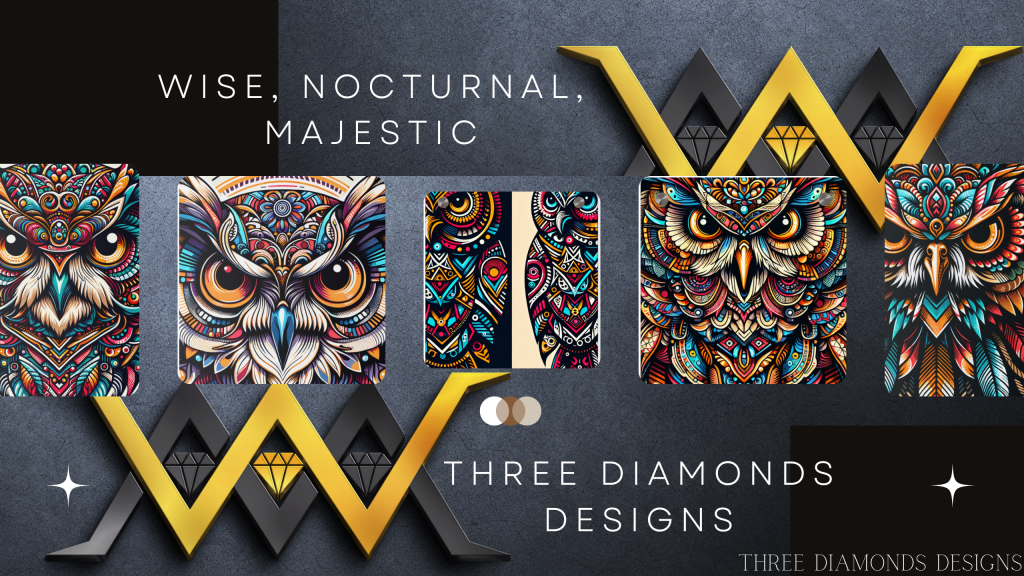
Step into the mysterious world of owls as we delve deep into their symbolic significance in art throughout history. From ancient civilizations to modern interpretations, these majestic creatures have captivated artists and viewers alike with their wisdom and enigmatic presence. Join us on a journey through time as we unravel the secrets behind owl symbology and its enduring influence on artistic expression.
Introduction to Owl Symbology
Introduction to Owl Symbology Since ancient times, owls have captured the imagination and curiosity of humans. With their nocturnal habits and striking appearance, these birds have been revered and feared in equal measure across different cultures around the world. From being associated with wisdom and knowledge to representing death and darkness, the symbolism surrounding owls is rich and diverse. In this section, we will take a closer look at owl symbology – what it means, how it has evolved over time, and its significance in various forms of art throughout history. The Wisdom of Owls One of the most well-known associations with owls is wisdom. This concept can be traced back to ancient Greek mythology where Athena, the goddess of wisdom, was often depicted with an owl as her companion. According to myth, Athena’s owl had the ability to see through deception and reveal hidden truths – a symbol of intelligence and insight. This connection between owls and wisdom has continued throughout history. In many cultures such as Native American, Hinduism, and Celtic traditions, owls are seen as wise creatures that possess secret knowledge of the spiritual world. Their large eyes are believed to represent their all-seeing nature while their silent flight symbolizes inner reflection. Death and Darkness On the other hand, some cultures have associated owls with negative connotations such as death and darkness. In ancient Rome, for example, owls were considered bad omens associated with witchcraft due to their nocturnal habits. Similarly, in medieval Europe, they were associated with witches or demons due to their eerie appearance and nocturnal calls. In many African countries including Egypt and Cameroon, owls are connected with death or are seen as messengers from the spirit world. These beliefs stem from their association with Hades – god of death in Greek mythology – who was often accompanied by an owl. Owl Symbolism in Art Throughout History Throughout history, artists have been fascinated by owls and have used them as symbols in their works. In ancient Egyptian art, the owl was depicted as a protector of the dead and also represented the goddess of wisdom, Seshat. In medieval Europe, owls were frequently portrayed in religious paintings to symbolize evil or temptation. In more recent times, owls have been featured in popular culture such as literature, films, and music. From Harry Potter’s loyal companion Hedwig to the wise owl Archimedes in Disney’s The Sword in the Stone, these birds continue to capture our imagination and inspire artistic expressions. Conclusion The symbolism surrounding owls is multifaceted and has evolved over time. While they are often associated with wisdom and intelligence, they have also been connected with death and darkness in some cultures. Regardless of their symbolic meaning, one thing is for sure – owls have played a significant role in shaping human beliefs and have left a lasting impression on different forms of art throughout history.
– Definition of Symbology
Symbology refers to the use of symbols or symbolic representations to convey a deeper meaning or message. It is an ancient practice that has been used in art, literature, and religion throughout history. In the case of owls, symbology plays a significant role in understanding their representation in art. The use of owl symbology dates back to ancient civilizations such as the Greeks, Egyptians, and Native Americans. Owls were often associated with wisdom, knowledge, and foresight due to their ability to see through darkness and hunt with precision. In Greek mythology, Athena, the goddess of wisdom, was often depicted with an owl by her side as a symbol of her intelligence and intuition. The Egyptians also revered owls as guardians of wisdom and protectors against evil forces. In Native American cultures, owls were seen as messengers between humans and spirits due to their nocturnal nature. They were believed to possess supernatural powers and were often consulted for guidance on important matters. This belief was also shared by many other indigenous cultures around the world. Throughout history, owl symbology has evolved but has always maintained its association with wisdom and mysticism. In Christian art during the Middle Ages, owls were portrayed as symbols of darkness and evil due to their association with witchcraft and pagan practices. However, they were later rehabilitated in Renaissance art when artists began depicting them as symbols of divine knowledge. In more recent times, owl symbology has taken on new meanings in various contexts. In Asian cultures such as China and Japan, owls are associated with good luck and prosperity due to their resemblance to Chinese characters that represent wealth and abundance. In modern Western society, owl symbology is often linked with ideas such as intuition, spirituality, introspection,and mystery.They have become popular motifs in contemporary arts such as tattoos,digital illustrations,and fashion designs.Owls are also frequently used in company logos or branding strategies,to convey qualities like intelligence and trustworthiness. The definition of owl symbology has evolved over time but has always maintained its association with wisdom and mysticism. By understanding the history and context behind owl symbology in art, we can gain a deeper appreciation for the significance of these majestic creatures in human culture.
– Brief history of owls in art
Owls have long been a fascination for artists throughout history. From the earliest cave paintings to modern art, these enigmatic birds have captured the imaginations of people around the world. In this section, we will take a brief look at how owls have been depicted in various forms of art throughout the ages. In ancient civilizations, owls were often associated with wisdom and knowledge. This is evident in the depictions of owl-headed goddesses such as Athena in Greek mythology and Lakshmi in Hinduism. The Egyptians also revered owls, often depicting them as protectors of the dead and guardians of knowledge and wisdom. During the Middle Ages, Christian artists began incorporating owls into their religious works. Owls were often used to represent evil or darkness, possibly due to their nocturnal nature and silent flight. However, they were also seen as symbols of protection against evil spirits due to their ability to see through darkness. In Renaissance art, owls continued to be portrayed as symbols of wisdom and intellectual pursuit. Artists like Leonardo da Vinci incorporated owl imagery into their works, with his famous painting “The Virgin and Child with St Anne” featuring an owl perched on St Anne’s shoulder. As European explorers traveled to new lands during the Age of Discovery, they encountered different species of owls that inspired new artistic representations. For example, William Blake’s poem “Tyger Tyger” features an owl among its list of animals representing creation and destruction. The 19th century saw a rise in romanticism in art which led to a renewed interest in nature and wildlife subjects. Painters such as John James Audubon created highly detailed illustrations of different owl species that showcased both scientific accuracy and artistic skill. In more recent times, contemporary artists have continued to draw inspiration from owls for their unique symbolism and aesthetic appeal. Some notable examples include surrealist painter Salvador Dali’s work “The Great Masturbator” which features an owl perched on a cross, and Japanese artist Tatsuo Miyajima’s installation “Counter Void” which features 300 mirrored owls suspended from the ceiling. The depiction of owls in art throughout history reflects their enduring appeal as symbols of wisdom, mystery, and spiritual significance. From ancient civilizations to modern times, these fascinating creatures continue to inspire artists to create works that capture their essence and symbolism.
The Meanings and Symbolism of Owls
Owls have been a symbol of wisdom, intelligence, and mystery for centuries. These nocturnal birds have captured the human imagination with their striking appearance, haunting hoots, and enigmatic behavior. As a result, they have played prominent roles in various cultures and mythologies throughout history. One of the most well-known meanings associated with owls is wisdom. This can be traced back to ancient Greek mythology where Athena, the goddess of wisdom, was often depicted with an owl as her companion. According to legend, the owl had the ability to see through darkness and reveal hidden truths. This association has carried over into modern times where owls are often seen as wise creatures who possess knowledge beyond that of humans. In addition to wisdom, owls also represent intelligence. Their large eyes and exceptional ability to hunt in low light conditions have led them to be seen as symbols of keen intellect and perception. In many cultures such as Native American and Celtic traditions, owls were believed to possess supernatural powers due to their heightened senses. The symbolism of mystery is another aspect commonly associated with owls. Due to their nocturnal nature and solitary lifestyle, these birds are often seen as mysterious creatures shrouded in secrecy. This has led them to be featured prominently in literature and art as symbols of magic or sorcery. In some cultures, owls are also seen as protectors or guardians. Their silent flight and sharp talons make them formidable hunters who can ward off potential threats from predators. In Japan, there is a belief that an owl’s presence can bring good fortune and protection from evil spirits. The coloration and physical characteristics of different owl species add further layers of symbolism. The white feathers on snowy owls have long been associated with purity and grace while the dark coloring around the eyes on barn owls has led them to be linked with death or otherworldly beings in some cultures. The multifaceted symbolism of owls has made them a popular subject in art throughout history. From ancient cave paintings to modern-day illustrations, owls have been featured as symbols of wisdom, intelligence, mystery, and protection. They continue to capture the imagination and inspire artists to this day.
– Wisdom and Knowledge
Wisdom and knowledge are two integral components of the owl’s symbolism in art throughout history. In many cultures, owls are seen as symbols of wisdom, intelligence, and higher understanding. This association can be traced back to ancient civilizations such as the Greeks, Egyptians, and Native Americans. The Greeks believed that the owl was a companion to Athena, the goddess of wisdom. They saw these birds as guardians of knowledge and protectors of sacred learning. In fact, Athena is often depicted with an owl perched on her shoulder or hand in Greek art. The wise owl symbolized the goddess’s ability to see through darkness and reveal hidden truths. Similarly, in ancient Egyptian culture, owls were seen as representations of wisdom and protection. Owls were associated with the god Horus, who was known for his great wisdom and knowledge. It was believed that these birds possessed secret knowledge that could guide souls through the afterlife. Native American tribes also held a deep reverence for owls and their symbolic connection to wisdom. Many tribes saw owls as messengers from the spirit world who offered spiritual guidance and insight. The ability of these birds to hunt silently at night further added to their mystical reputation as wise creatures. Throughout history, artists have incorporated this association between owls and wisdom into their artworks. One notable example is “Allegory with Venus and Cupid” by Italian Renaissance painter Sandro Botticelli. In this painting, an owl is seen perched on top of a bookshelf next to Venus – a representation of love – while Cupid holds onto it tightly with one hand while pointing towards it with his other hand. In addition to being symbols of wisdom itself, owls are often depicted alongside figures known for their intellect or philosophical beliefs in art throughout history. For instance, German painter Albrecht Dürer painted an image titled “Melancholia I” which shows an owl sitting atop a figure believed to represent the great philosopher, Aristotle. In modern times, the wisdom and knowledge associated with owls have continued to inspire artists. Street artist Banksy’s famous piece “Girl with Balloon” features a girl reaching for a red heart-shaped balloon which is being held by an owl. This image has been interpreted as a commentary on the pursuit of knowledge, with the owl serving as a symbol of wisdom guiding us towards our goals. The symbolism of owls in art throughout history is closely intertwined with ideas of wisdom and knowledge. From ancient civilizations to contemporary works, these majestic birds have served as powerful symbols representing our quest for understanding and enlightenment.
– Intuition and Perception
Intuition and perception are two key elements in understanding the symbolism of owls throughout history. Owls have been revered as wise creatures with heightened senses, able to navigate through darkness and see beyond what is visible to the naked eye. This innate ability has led many cultures to associate owls with intuition and perception. In ancient Greek mythology, the goddess Athena was often depicted with an owl on her shoulder, symbolizing her wisdom and keen insight. The owl became a sacred bird to Athena, representing her ability to see through illusions and perceive the truth. This link between owls and heightened perception can also be seen in Native American cultures, where owls are believed to possess spiritual powers that aid in clairvoyance and divination. The physical characteristics of owls further reinforce their association with intuition and perception. With their large eyes and exceptional hearing abilities, they possess a heightened awareness that allows them to navigate their surroundings with ease. In art throughout history, this is often portrayed through depictions of owls perched high on tree branches or gazing intently into the distance. In addition to their visual acuity, owls are also known for their acute sense of hearing. Their specialized feathers allow them to fly silently through the night sky as they hunt for prey, relying on their sharp auditory skills to locate food. This impressive attribute has led many cultures to view owls as symbols of clairaudience or clear hearing. Moreover, it is not just physical senses that contribute to the symbolism of intuition and perception associated with owls. In some cultures, such as ancient Egypt and India, owl sightings were believed to be omens or messages from ancestors or deities. These sightings were seen as signs that one should pay attention to their inner voice or trust their instincts. In modern times, these associations continue as people turn towards owl imagery for guidance in navigating life’s uncertainties. Owls have become popular symbols in artwork, literature, and even corporate logos, representing qualities such as wisdom, insight, and intuition. The symbolism of owls in art throughout history is deeply intertwined with ideas of intuition and perception. Their physical attributes and cultural associations have cemented their place as symbols of heightened awareness and inner guidance. Whether viewed as messengers from the divine or wise creatures with extraordinary abilities, owls continue to inspire artists and individuals alike with their symbolic significance.
– Mysticism and Magic
Mysticism and magic have long been associated with owls in art and mythology. Throughout history, these wise birds have been revered for their mysterious nature and powerful symbolism. From ancient cultures to modern interpretations, the connection between owls and mysticism has remained a constant theme in art. In many ancient cultures, owls were seen as symbols of wisdom and knowledge. The Greeks believed that Athena, the goddess of wisdom, had an owl as her companion. In fact, the Greek word for owl, “glaukos,” also means “bright” or “gleaming,” further emphasizing the link between owls and intelligence. Similarly, in Hindu mythology, the goddess Lakshmi is often depicted with an owl as her mount, representing her role as a bringer of knowledge. However, alongside their associations with wisdom, owls also held a mystical quality in many cultures. In Celtic mythology, they were considered to be messengers from other realms and guardians of hidden knowledge. This is reflected in various artworks from this time period where owls are depicted alongside druids or other magical figures. As time went on, owls continued to hold a special place in mysticism and magic. During the Middle Ages in Europe, they were often associated with witches and witchcraft due to their nocturnal nature and perceived abilities to see through darkness. This belief was further reinforced by writers such as Shakespeare who portrayed them as familiars (spiritual helpers) of witches in his play Macbeth. In Eastern cultures such as Japan and China, owls were also linked to supernatural powers and magical abilities. The Japanese believe that if you hear an owl calling your name at night it is a sign that you will soon die; whereas in China they are seen as symbols of prosperity and good fortune. The association between owls and magic can also be seen throughout various forms of art across different time periods. In medieval European illuminated manuscripts depicting scenes from the Bible, owls were often included as a symbol of evil or darkness. This is most likely due to their nocturnal nature and association with witches during this time. In modern times, the link between owls and mysticism has continued through popular culture and contemporary art. In films and literature, owls are often portrayed as magical creatures with supernatural abilities. Additionally, in surrealist art, owls are a common motif representing hidden knowledge and subconscious thoughts. The symbolism of owls in art throughout history reflects their enduring connection to mysticism and magic. Whether seen as wise messengers from other realms or associated with witchcraft and supernatural powers, these enigmatic birds have captured our imaginations for centuries. Through art, we can continue to explore the mystical world of owls and uncover their secrets of wisdom and magic.
Owl Motifs in Art Throughout History
Owls have long been a source of fascination for artists throughout history. Their mysterious and wise appearance has made them a popular subject in various forms of art, from ancient cave paintings to modern-day masterpieces. In this section, we will delve into the symbolism and significance of owl motifs in art throughout different eras. Ancient civilizations such as the Greeks, Romans, and Egyptians all incorporated owls into their artistic depictions. In Greek mythology, Athena, the goddess of wisdom, was often depicted with an owl perched on her shoulder or accompanying her. This association with wisdom and knowledge continued in Roman culture where owls were seen as guardians of learning. Egyptian hieroglyphs also feature owls as symbols of protection and guardianship. Moving to the Middle Ages, owls took on a more sinister connotation in Christian art. They were often associated with darkness and witchcraft due to their nocturnal habits and eerie hooting sounds. In European folklore, they were believed to be messengers of death or witches’ familiars. However, during the Renaissance period, owls experienced a revival in their positive symbolism. Artists like Leonardo da Vinci used them as symbols of wisdom and philosophy in their paintings. The famous painting “Leda and the Swan,” by Michelangelo Buonarroti depicts Zeus transforming into an owl while seducing Leda – an allegory for divine inspiration. In Asian cultures, particularly Japan and China, owls are seen as symbols of good fortune and luck. They are often depicted alongside other auspicious creatures like dragons or cranes in traditional paintings and woodblock prints. With the rise of Spiritualism during the 19th century, there was renewed interest in owls’ symbolic meaning in art. Many artists explored themes of mysticism, spirituality, and occultism through their depiction of these enigmatic birds. In modern times, artists continue to draw inspiration from owls in their works. The surrealist movement, for example, often featured owls as symbols of the subconscious mind and the mysterious depths of the human psyche. Owl motifs in art have evolved throughout history, reflecting various cultural beliefs and values. From ancient civilizations to modern times, these wise creatures continue to inspire artists with their symbolic significance and captivating appearance. Whether seen as guardians of knowledge or messengers of death, owls will always hold a unique place in the world of art.
– Ancient Civilizations
Throughout history, owls have been revered and symbolized in various ancient civilizations around the world. From Egypt to Greece, these enigmatic birds have held a significant place in the beliefs and cultures of our ancestors. In ancient Egyptian mythology, the owl was closely associated with the goddess of wisdom, knowledge and writing – Ma’at. She was often depicted as having an owl as her sacred animal companion, representing her ability to see through darkness and reveal hidden truths. The presence of owls was also believed to bring protection and guidance from the gods. In Greek mythology, Athena – the goddess of wisdom, war strategy and crafts – was often accompanied by an owl as her familiar. It is said that she gifted this wise bird with its nocturnal vision in order to enhance its abilities as a protector. The owl thus became a symbol of foresight and intelligence, embodying Athena’s characteristics. The Mesoamerican civilization also had a strong connection with owls. The Aztecs believed that these birds were messengers between humans and their gods. They were highly respected for their ability to hunt at night while remaining silent and swift – qualities that were deemed essential for successful warriors. Similarly, Native American tribes saw owls as powerful guardians and protectors. In many indigenous cultures, they were seen as a bridge between the physical world and the spiritual realm due to their ability to fly silently through the night sky without being seen or heard. Owls were also considered omens of death or change in some tribes, while others saw them as symbols of wisdom and prophecy. In Chinese culture, owls are associated with longevity and prosperity due to their exceptional eyesight which allows them to see far into the future. They are also believed to possess mystical powers that can ward off evil spirits. Furthermore, throughout ancient Mesopotamia – present-day Iraq – carvings of winged lions with human heads known as “lamassu” were often depicted with wings that resembled large owl feathers. These creatures were guardians of the temples and palaces, symbolizing knowledge, wisdom and protection. It is evident that owls have played a significant role in the beliefs and cultures of ancient civilizations. From being symbols of wisdom and foresight to protectors and messengers between humans and gods, these birds continue to hold a special place in our history and continue to fascinate us with their mysterious ways.
– Egyptian, Greek, and Roman depictions
The Wisdom of Owls: Exploring Owl Symbology in Art Throughout History – Egyptian, Greek, and Roman depictions – Throughout history, owls have been depicted in various forms of art by different cultures. In this section, we will explore the symbolic meanings behind owl depictions in ancient Egyptian, Greek, and Roman art. In ancient Egypt, the owl was associated with the goddess of wisdom and magic, Isis. She was often depicted with an owl perched on her head or shoulder. The Egyptians believed that the owl had knowledge about the afterlife and could guide souls to their final resting place. This symbolism is reflected in their funerary art where owls were often included as a symbol of protection for the deceased on their journey to the afterlife. In Greek mythology, Athena was the goddess of wisdom and her sacred animal was the owl. According to legend, Athena’s favorite bird companion was a little owl called “glaukopis”, meaning “bright-eyed”. The Greeks considered owls to be symbols of intelligence, foresight, and protection. They also believed that owls had connections to prophecy and could reveal hidden truths. As such, images of owls were frequently featured on coins and other artifacts during this time period. In Roman culture, the owl was associated with Minerva – their version of Athena – who was also revered as a goddess of wisdom and war strategy. However, unlike in Greek mythology where owls were seen as wise creatures, Romans viewed them as ominous symbols representing death or disaster. Owls were also associated with witches and dark magic in Roman folklore. Despite these contrasting views on owls between ancient Greece and Rome, both cultures used them extensively in their artwork for decorative purposes. For example, owls can be seen adorning pottery pieces such as vases or plates. Apart from religious significance, owls also held a practical purpose in both Greek and Roman societies. They were considered as natural pest controllers and were welcomed in homes and public spaces to keep rodents at bay. The depictions of owls in ancient Egyptian, Greek, and Roman art showcase their importance as symbols of wisdom, intelligence, and protection. These beliefs have transcended time and continue to be reflected in art forms even today. The wise reputation of owls has stood the test of time and continues to fascinate people all over the world.
– Native American beliefs
Native American cultures have a deep connection to the natural world and often incorporate animal symbolism into their spiritual beliefs. Owls, with their mysterious and wise nature, hold a significant place in many Native American belief systems. In this section, we will explore the various meanings and interpretations of owls in Native American cultures. The owl is seen as a symbol of wisdom and knowledge by many Native American tribes. This can be attributed to the bird’s remarkable ability to see through darkness and its keen perception. For example, in Navajo mythology, the owl is associated with the spirit of an old woman who possesses great knowledge and teaches important lessons to humans. Similarly, in Lakota culture, owls are revered for their intelligence and considered messengers from the spirit world. In addition to wisdom, owls also represent intuition and foresight in Native American beliefs. The Hopi tribe sees owls as guides that help individuals navigate through life’s challenges by providing insights from the unseen realm. It is believed that owls possess supernatural powers that allow them to see beyond what is visible to others. Owls are also closely linked to death and rebirth in many Native American traditions. For instance, among the Ojibwe people, it is believed that when someone dies, their soul takes on the form of an owl before moving on to the afterlife. In some cultures, such as the Cherokee Nation, seeing an owl during or after mourning period is seen as a sign of comfort from ancestors. Furthermore, different Native American tribes associate specific qualities with different types of owls. The Great Horned Owl is often regarded as a protector due to its fierce appearance and powerful hunting abilities. The Screech Owl symbolizes transformation because of its ability to camouflage itself effortlessly into its surroundings. One common theme across these varied interpretations of owl symbolism in Native American beliefs is that they all highlight the spiritual significance of these birds as messengers between the physical and spiritual worlds. Owls are seen as guides, bringing messages and wisdom from the spirit realm to those who seek it. Owls hold a deep and meaningful place in Native American cultures, representing wisdom, intuition, death and rebirth, protection, and transformation. They serve as powerful symbols of the connection between humans and nature, reminding us to pay attention to our inner voices and trust in the unseen forces that guide us.
– Medieval Times
Medieval Times, also known as the Middle Ages, was a period in history that spanned from the 5th century to the 15th century. It is often characterized as a time of great change and upheaval, marked by feudalism, the rise of Christianity, and numerous wars and conflicts. During this era, art played an important role in society and owl symbology can be found in various forms of medieval art. One of the most prominent examples of owl symbolism in medieval art can be seen in illuminated manuscripts. These were hand-written books that were meticulously decorated with intricate designs and illustrations. Owls were commonly depicted sitting on top of trees or perched on branches within these illuminations. In Christian art, owls were often used to symbolize wisdom and knowledge, which was highly valued during this time period. Another popular form of owl symbolism in medieval art was through heraldry. Heraldry refers to the system by which coats of arms or emblems were created to identify individuals or families. Owls were frequently included in heraldic designs due to their association with wisdom and intelligence. They could also represent stealth and vigilance, making them a suitable symbol for knights or warriors. In addition to being featured in artwork, owls also appeared in literature during Medieval Times. One famous example is Geoffrey Chaucer’s poem “The Parliament of Fowls,” where he describes an assembly of birds who gather together to choose their mates on Valentine’s Day. Among these birds are three species of owls – the barn owl, tawny owl, and screech owl – each representing different aspects such as beauty, wisdom, and love. Owls were not only depicted as symbols but also had practical uses during Medieval Times. Falconers would use trained owls called “owlers” to hunt small game such as mice or rabbits for food. Due to their exceptional eyesight and silent flight, owls were highly valued by falconers and considered a symbol of status and wealth. Owl symbology was prevalent in medieval art due to its strong associations with wisdom, intelligence, and power. Whether it was through illuminated manuscripts, heraldry, literature, or practical use in hunting, owls played a significant role in shaping the visual culture of this period. Today, we can still see the influence of owl symbolism in art and literature as they continue to be revered creatures that represent wisdom and intellect.
– Christian symbolism
Christianity has a rich history of using symbolism to convey important religious concepts and beliefs. The use of symbolic animals, such as the owl, can be traced back to early Christian art and literature. In this section, we will explore the various ways in which owls have been used as symbols in Christian art throughout history. One of the earliest associations between owls and Christianity can be found in the Bible. In both the Old and New Testaments, owls are mentioned as unclean animals that should not be eaten or sacrificed (Leviticus 11:17; Deuteronomy 14:16). This negative connotation is due to the nocturnal nature of owls and their association with darkness and death. However, as Christianity spread throughout Europe during the Middle Ages, the owl began to take on a more positive meaning. This shift can be seen in medieval manuscripts where owls were depicted sitting on top of saints’ heads, symbolizing their wisdom and holiness. Owls were also often included in depictions of St. John the Evangelist, who was known for his profound spiritual insight. In addition to representing wisdom and spiritual enlightenment, owls were also associated with protection in Christian art. This is likely due to their keen senses and ability to see in low light conditions. As such, they were often placed at entrances of churches or homes as guardians against evil spirits. The owl’s ability to rotate its head almost 360 degrees also made it a symbol of God’s omnipotence and all-knowing nature. This concept is depicted in numerous artworks from different periods where an owl is shown perched atop an open book or holding a scroll with words from Scripture written on it. Another significant use of owl symbolism in Christian art can be found during the Renaissance period when artists began incorporating allegorical representations into their work. The owl came to represent contemplation and introspection – virtues highly valued by Christians seeking spiritual growth. In modern times, the owl continues to be used as a symbol in Christian art. The wise and watchful nature of these birds is often seen as a reflection of God’s presence and guidance in our lives. Whether depicted in paintings, sculptures, or even stained glass windows, owls continue to hold a special place in Christianity as powerful symbols of faith and wisdom.
 Creative Corner